
Screenshots



About this app
Busuu: Learn Languages helps learners build language skills through structured courses that combine short lessons with listening, pronunciation, vocabulary, and speaking practice. Its approach can be useful for people who want a guided sequence rather than a collection of disconnected exercises: lessons progress through several language skills, and learners can revisit earlier material as they study. Audio and video from fluent speakers, along with feedback from the language-learning community, add opportunities to hear and produce language beyond the lesson exercises.
Fourteen courses with room to progress
The app offers courses in Spanish, Japanese, French, Arabic, Chinese, Dutch, English, German, Italian, Korean, Polish, Portuguese, Russian, and Turkish. Courses generally span beginner to intermediate study, and the supplied course information says they align with the Common European Framework of Reference for Languages (CEFR). Placement tests can help learners choose a starting point that suits their existing knowledge, while the course sequence introduces material progressively.
Lessons address vocabulary, grammar, pronunciation, reading, writing, listening, and speaking. Their relatively brief format breaks study into smaller portions, and learners can return to earlier content for review. Some courses also include more specialized material, such as business English, exam preparation, manga-themed Japanese, and advanced Spanish exam preparation. Japanese learners receive separate lessons for hiragana, katakana, and kanji, giving the writing systems dedicated attention within the course.
Practice with spoken and written language
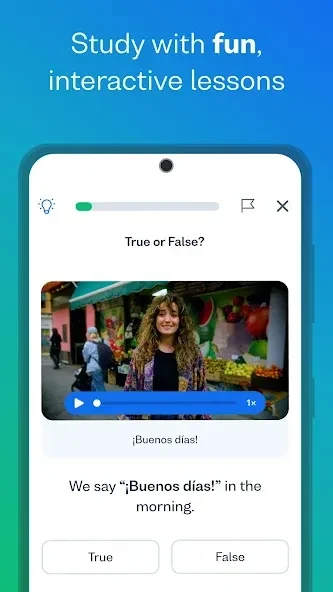
Audio and video featuring fluent speakers complement the learning activities. Hearing speech can provide examples of how words sound, while video offers a view of how a speaker forms unfamiliar sounds. These materials sit alongside exercises in listening and pronunciation, connecting recognition with active practice rather than relying on written vocabulary alone.
The community features add a different kind of practice. Learners can submit written and spoken work and receive corrections or advice from people familiar with the language they are studying. Producing a complete response gives learners a chance to try out phrasing, while feedback may point out wording that a simple automated exercise would not address. This peer input is a supplement to the course material, not a substitute for sustained teaching from a qualified instructor.
Progress, review, and course changes
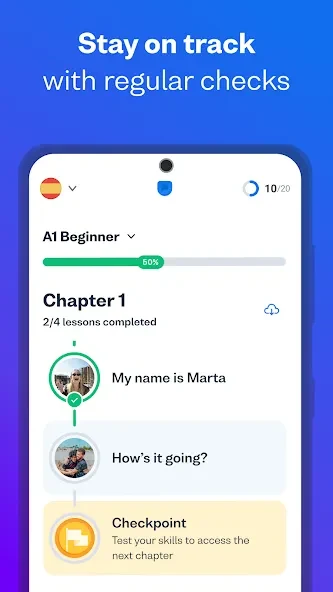
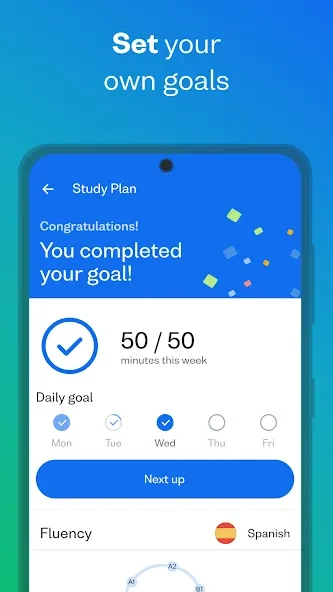
Busuu uses learning progress to shape study plans and follow-up tests intended to consolidate material. Progress-tracking tools let learners see how their study is advancing and can help identify areas they may want to revisit. The combination of review exercises, tests, and tracked progress links individual lessons to a broader course journey.
Learners can switch between courses using the round flag for their current language and selecting another course. The supplied help information says progress is retained when someone changes courses, so they can continue where they left off if they return later. The website also provides access to extra courses for the same language through its Courses section. This flexibility is useful for exploring another course without treating a change as a reset.
Access and reported issues
The source describes Busuu as usable without payment, while noting that a subscription is needed for full access. The free option can therefore give learners a way to explore the lesson style, but it does not provide access to everything in the service. Whether a subscription is worthwhile depends on a learner’s interest in the broader course selection, specialty content, and review tools; the supplied information does not specify subscription prices or exactly which features are included at each access level.
The source also mentions reports of occasional problems: some users have had difficulty returning to an earlier screen after moving forward in a lesson, and others have reported vocabulary reviews that do not add words or progress percentages that stop updating in Latin Spanish. These are reported inconsistencies rather than evidence that every learner will encounter them, but they may affect lesson navigation or progress tracking for some users.
Managing account details
The supplied account instructions say usernames and email addresses can be changed on the Busuu website after signing in, opening the profile, and editing the relevant field in the Account tab before saving. Phone numbers are also managed through the website’s Account tab, not through the app according to those instructions. When changing a number, the correct international dialing code should be selected, and the source notes that only one account can be linked to a phone number.
Overall, the app brings a progressive course structure together with speaker recordings, review, progress tools, and community corrections. It may suit learners who want guided practice across several language skills and are comfortable supplementing lessons with peer feedback. The available course choice is limited to the 14 listed languages, and full access requires a subscription.
Version history
View all05 Sep 2026 · stable
Frequently asked questions
Which languages are available?
The listed courses are Spanish, Japanese, French, Arabic, Chinese, Dutch, English, German, Italian, Korean, Polish, Portuguese, Russian, and Turkish.
Can I change courses without losing my progress?
Yes. The supplied help information says progress is kept when you switch courses, so you can resume a previous course where you left off.
How can I change my account details?
Sign in on the Busuu website, open your profile, and edit your username, email, or phone number in the Account tab, then save. The supplied instructions say phone numbers cannot currently be changed in the app; choose the correct international dialing code, and note that only one account can be linked to a phone number.