
Screenshots
About this app
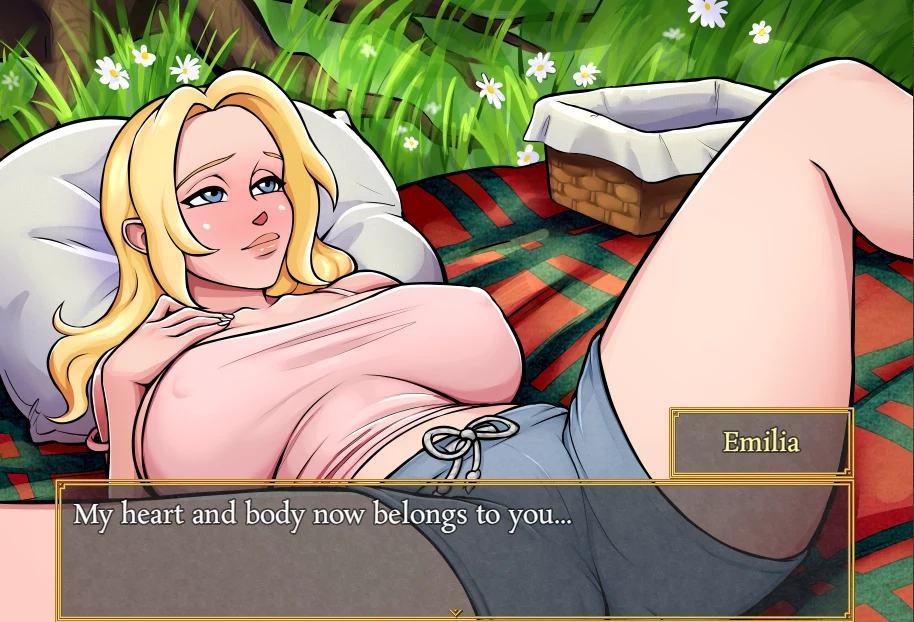
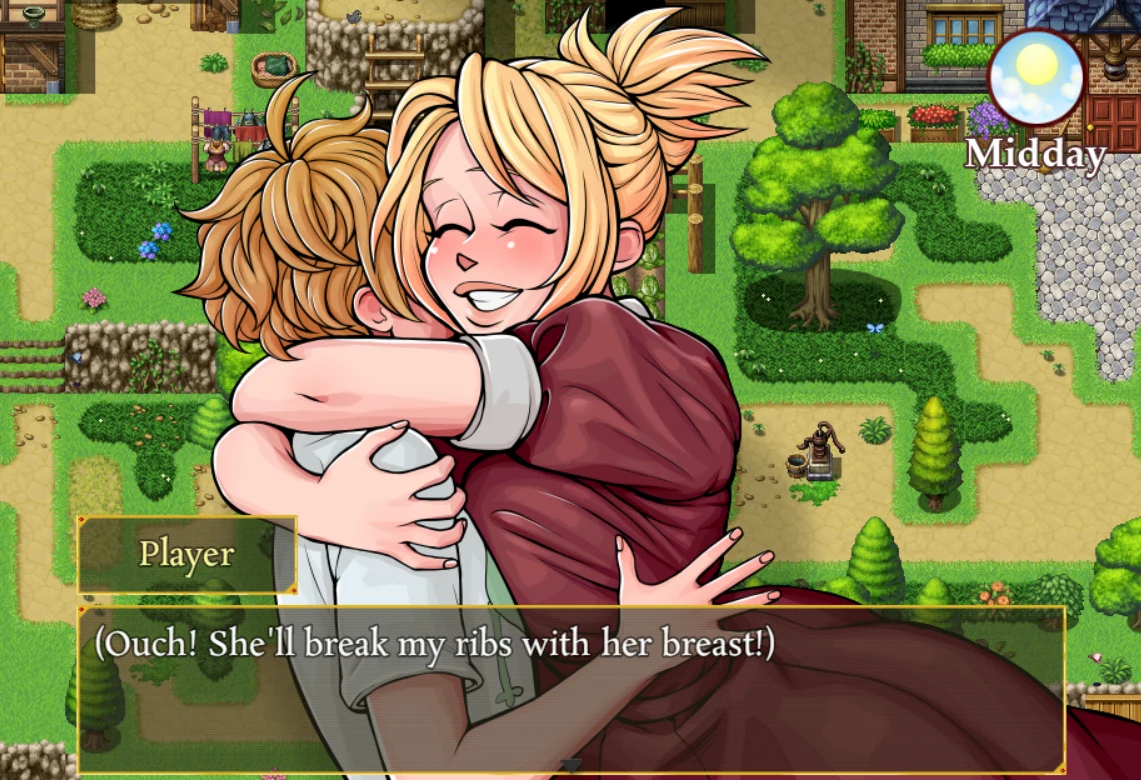
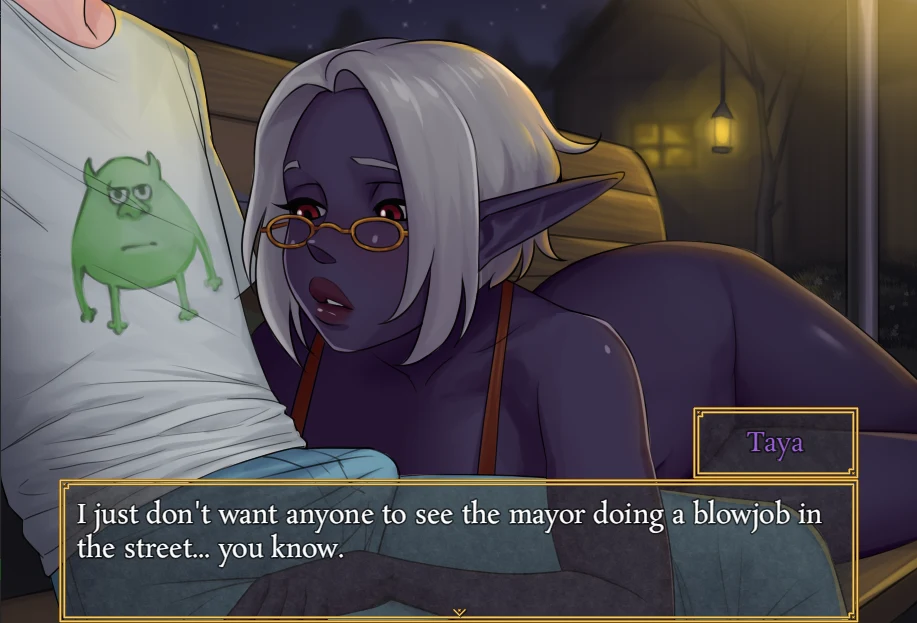
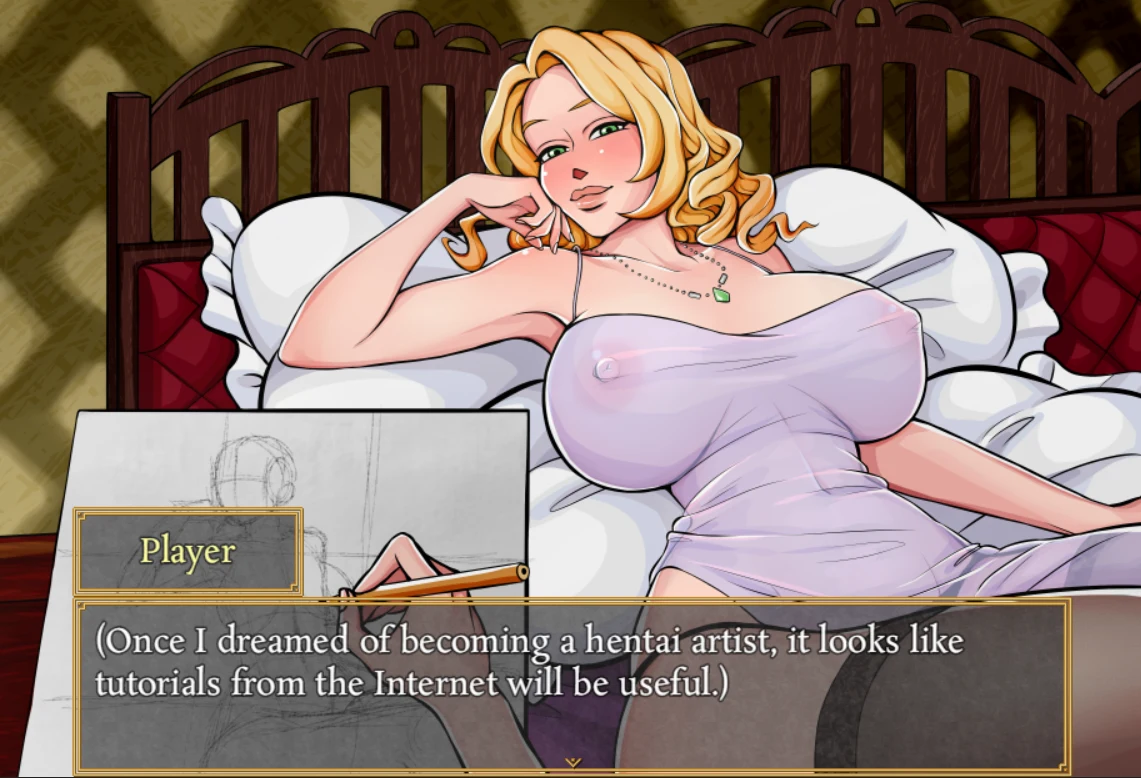
Alvein is a story-driven casual role-playing game in which the protagonist returns to a long-lost hometown and finds that its men have mysteriously disappeared. The central journey involves exploring the village, meeting the women who remain, and taking on quests connected to their circumstances. This gives the game two connected purposes: investigating what has happened to the community and building relationships with its characters. Along the way, players can move between different locations, trigger story events, solve puzzles, and make dialogue decisions that affect alliances and access to later story branches.
A village mystery built around exploration
Exploration is the foundation of Alvein’s structure. The map allows players to visit different scenes and encounter a range of women, each associated with personal stories, secrets, and individual questlines. These encounters are not presented as isolated conversations; the supplied description connects them to the wider plot and to the protagonist’s progress through the village-saving storyline. As relationships develop, players can learn more about each character’s personality and background while unlocking additional events and animations.
The game’s emotional premise also extends to the protagonist. One of the stated story threads concerns his guilt over his father’s death, placing personal growth alongside the responsibility of helping the village. This creates a contrast between private concerns and larger objectives. The character-focused approach means that progress is intended to come not only from completing tasks, but also from understanding the people affected by the mystery.
Choices, alliances, and character progression
Dialogue choices are described as an important part of the narrative. Players may have to weigh personal desires against what appears to be best for the wider community, with decisions influencing alliances and opening hidden branches of the story. The heroines are presented as having layered motivations rather than identical roles, with examples ranging from vengeful warriors to cunning strategists. Their different perspectives are linked to separate questlines that can influence the main plot.
Relationship progress also has a practical role. The source material says that solving puzzles can win the girls’ favor and speed up progress, while further development with a character can unlock more interactions and complete scenes. A current development example focuses on Fay, whose reactions are intended to change according to the player’s progress. The notes describe planned conversation interactions and different responses depending on how far the relationship has advanced, but these details should be understood as part of the game’s development plans rather than a guarantee about a finished release.
Puzzles, tactical situations, and chance
Alvein uses puzzles and mini-games alongside its story content instead of relying exclusively on conventional combat. Environmental riddles are described as requiring logic and creative problem-solving, while tactical combat scenarios are intended to reward planning rather than simple strength. This combination gives exploration a more active role: investigating an area can lead to a puzzle, and solving it may affect both narrative progress and a character relationship.
The design also includes a luck-based mechanic called the Fate Meter. According to the supplied material, it can influence battles and social encounters through unpredictable critical boosts or sudden setbacks. This means that some confrontations and conversations may not be determined entirely by a fixed sequence of choices. The Fate Meter is presented as a dynamic element that adds uncertainty to otherwise deliberate puzzle, quest, and relationship systems.
Guardian trials and village responsibilities
Another group of activities is collected under the Guardian Trials. These challenges include village-defense mini-games and resource-management tasks that test leadership skills. Their stated purpose is to help the protagonist prove his worth and earn the Guardian title. In practical terms, these activities broaden the game beyond personal conversations: the player is also asked to manage responsibilities connected to protecting the village and supporting its people.
The Guardian content works alongside the broader emotional storyline. The protagonist’s internal conflict, the village’s unexplained crisis, and the needs of individual characters are all described as parts of the same progression. As a result, the game’s systems are intended to connect personal decisions with community-level consequences, although the supplied information does not explain the exact rules for resource management or the full range of Guardian challenges.
Development, presentation, and customization
The development notes identify a major move from Ren’Py to Unity. The stated reason was the need for a full game engine that could support more customization and interactivity. The transition required scripts and other work to be rewritten, but the notes say that the main technical systems had largely been completed at the time of writing and that development had moved toward adding finished content, polishing visuals, and preparing a playable build.
The same notes describe animated scenes with layered movement, smoother transitions, idle poses, and blinking. They also say that the game is intended to use a consistent animation style across its scenes. These comments concern a technical build and development progress, so they describe the direction of the project rather than a finalized presentation.
Character customization is another planned feature. A character-creation screen was being assembled so that players could customize the main character to some extent when starting a new game. The materials also focus on making interactions with Fay more dynamic, including responses that vary with relationship progress. The developers describe a balance between deeper character development and a wider range of gameplay and story content, rather than making the project solely an interaction simulator.
Release information and current limitations
The supplied release notes do not provide a confirmed launch date. They describe the first version as an upcoming release and mention plans for a Web version, Windows, Linux, and Android. A macOS version is described as a possibility if there is enough demand. The notes also distinguish between the technical build shown in development material and the planned finished content, so interface elements such as text boxes, fonts, and other visual details may change.
Because the project is described as still in development, some advertised systems may not yet be complete or available in the same form at release. The source specifically says that content was still being added and that the team was working toward a first playable build. It also mentions that patrons were expected to receive save support on the Web version and early alpha access, but those arrangements do not establish general Android availability, a final feature set, or a firm release schedule.
Version history
View all01 Sep 2026 · stable
Frequently asked questions
What kind of game is Alvein?
Alvein is described as a story-driven casual role-playing game combining map exploration, character relationships, puzzles, mini-games, dialogue choices, and some tactical situations.
What is the main story premise?
The protagonist returns to a long-lost hometown and discovers that all the men have mysteriously disappeared. The story follows efforts to investigate the situation, help the village, and form relationships with the women encountered there.
Does Alvein include puzzles and mini-games?
Yes. The supplied description mentions environmental riddles, tactical combat scenarios, village-defense activities, and resource-management challenges.
Is Alvein finished?
The development notes describe it as still in progress, with content, visual polish, and a first playable build still being prepared. No exact release date is provided.
Which platforms are planned?
The notes mention a Web version, Windows, Linux, and Android. macOS is described as a possible later platform if demand is sufficient.