
Screenshots

About this app
Bike Mayhem is a bicycle racing game in which players ride mountain trails, tackle obstacles, and perform tricks during jumps. Its activities include timed races and freestyle events, with equipment choices and leaderboard challenges adding other ways to approach a run.
What do you do on the trails?
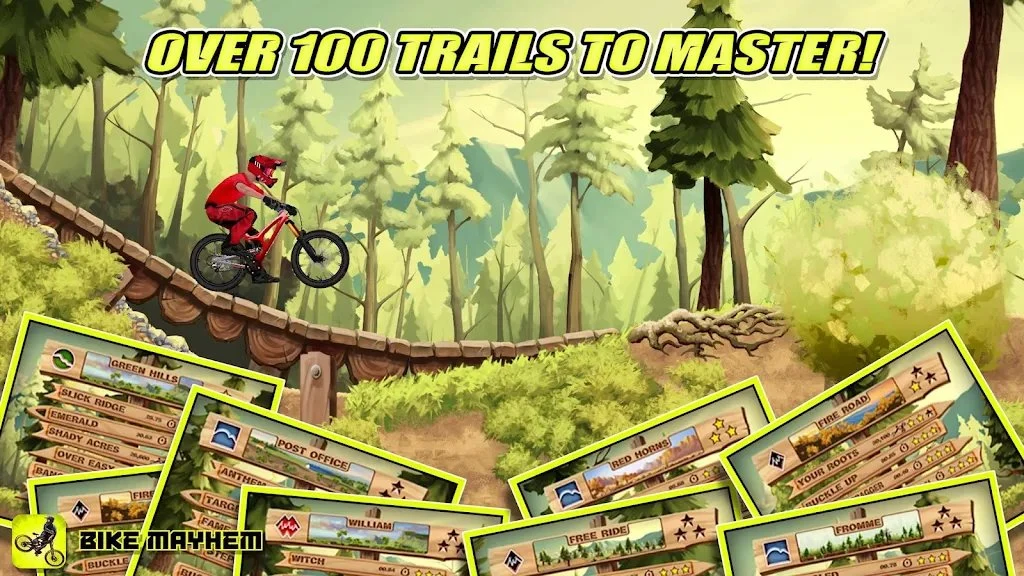
The main activity is riding across more than 100 trails set among multiple mountains. The courses are described as drawing inspiration from real locations and include downhill sections, forests, jumps, and rugged ground. Obstacles and changes in terrain shape each ride, while the game’s physics and suspension are intended to respond to rough surfaces and landings.
Racing and freestyle events give a ride different goals. Timed races focus on completing a trail against the clock, while freestyle events reward trick combinations and higher scores. The description also mentions distance and time as measures used in leaderboard challenges. It does not specify one single objective for every course, so the relevant target depends on the event.
How do tricks and riding actions work?
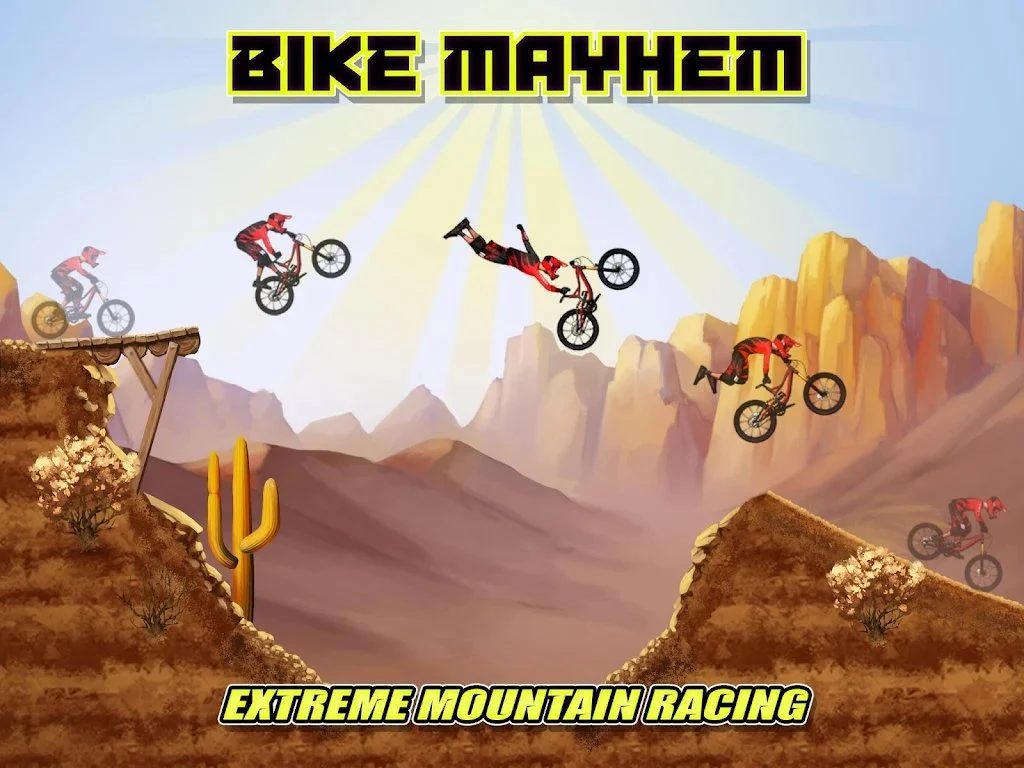
The documented actions include pedaling, braking, leaning, and using a pump or hop action. Players can lean to add flips to a trick combination, and wheelies before and after a jump can also extend a combo. Jumps provide opportunities to perform flips and other tricks; successful combinations contribute to event scores and can help unlock gear.
The description also says players can use a finger to grab the rider and toss them around the map, whether they are on or off the bike. It does not give a button layout or map each action to a particular screen position, so those control details should not be assumed.
What are the race and freestyle goals?
Timed events are based on completing a trail in a race against time. The timer does not begin until the player pedals or brakes, according to the supplied tips. Freestyle events instead emphasize trick combos and scores. The description says that staying on the bike is necessary to earn three stars, while using checkpoints limits the result to a maximum of one star.
For a downhill section, the supplied strategy is to hold the pump or hop action when entering it to gain a speed boost. These are stated game tips rather than a complete walkthrough; the best approach can depend on the trail and event.
How does equipment customization work?
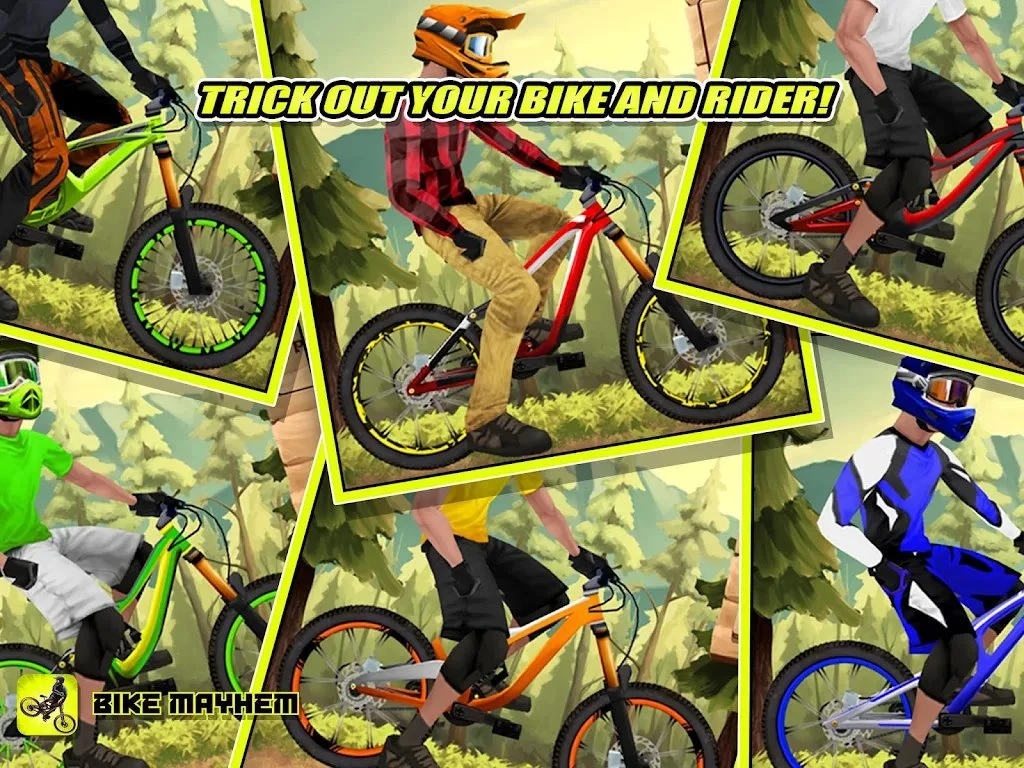
Progress through the mountains and challenges gives players access to more than 90 gear items. Equipment can change the rider’s appearance and the bike’s performance. Frames and wheels can be upgraded or selected in combinations, with their effects described in terms of turning, acceleration, and response to rugged terrain. The broader equipment description also identifies speed, agility, and power as bike attributes that can be adjusted for a track.
Choosing a frame and wheel combination to suit a trail is one of the supplied scoring tips. The source does not give numerical stats or specific recommended setups, so it does not identify a single best combination. Instead, equipment selection is presented as a way to tune the bike for a particular course or riding preference.
How do progression and leaderboards fit in?
Tricks can earn higher scores and create opportunities to unlock gear, while completing mountain challenges also provides access to customization items. The description mentions stars as a result for trail performance and identifies staying on the bike as important for earning the three-star result. It does not explain a complete level-unlock sequence or provide a detailed account of how rewards are awarded.
Leaderboard challenges let players compare results with friends and other players. The listed comparison measures include points, distance, and time. Boosters are also mentioned as a way to help on a difficult trail or pursue a higher leaderboard position, although the source does not describe their types or how they are obtained.
What play options are described?
The game description names timed races and freestyle events as distinct activities. It also describes online leaderboard challenges with friends and other players, as well as offline gameplay. These claims describe separate aspects of play; the source does not explain which specific events or features are available offline.
Version history
View all30 Mar 2026 · stable