
Screenshots
About this app
Days Bygone is a strategy tower defense game where you defend a castle against waves of monsters, Titans, and bosses while building a stronger team and improving your defenses. Its central loop combines direct tapping with longer-term decisions: defeat enemies to earn gold and elixir, strengthen stats and abilities, and push farther before using a rewind to develop your account further. Alongside the main defense, the game includes hero recruitment, weapon choices, spells, guilds, dungeons, expeditions, fossils, and a global leaderboard, giving players several ways to support continued castle growth.
Defend against continuous enemy waves
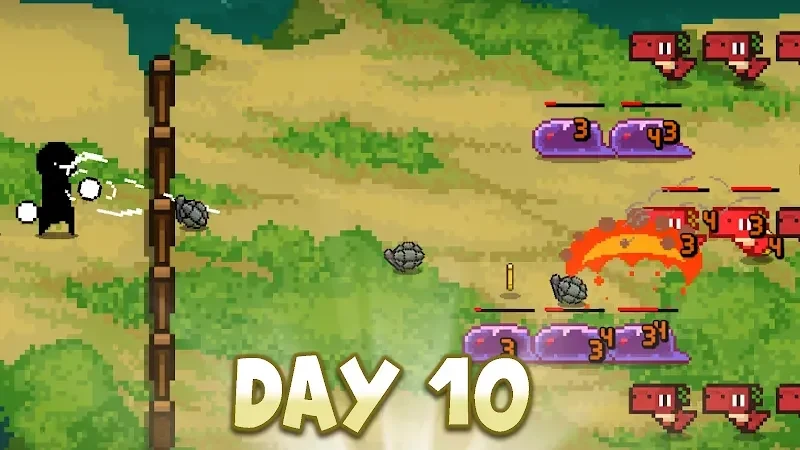
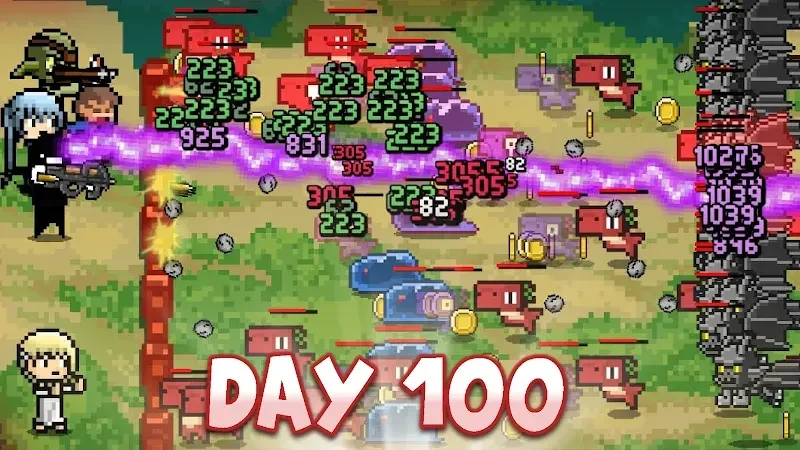
The main battle asks you to protect your castle while enemy forces arrive in large numbers. The basic control is deliberately direct: tap to shoot, then use equipment, spells, skills, and heroes to handle the pressure. This simple input does not remove the strategic element, because different threats call for different responses. Long-range weapons, bombs, and traps can be used alongside offensive and defensive spells, while hero abilities provide additional ways to manage dangerous situations.
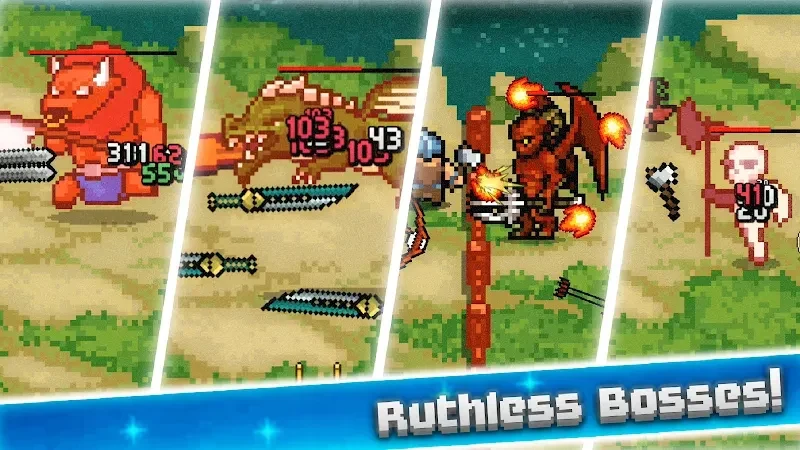
Progress is measured through increasingly difficult stages, with enemies and bosses testing how effectively your current setup works. The objective is not only to survive one wave, but to reach a higher day and improve the resources gained from later attempts. The game also includes a competitive leaderboard, allowing players to compare their castle-defense progress with other players globally.
Build a team from heroes, weapons, and skills
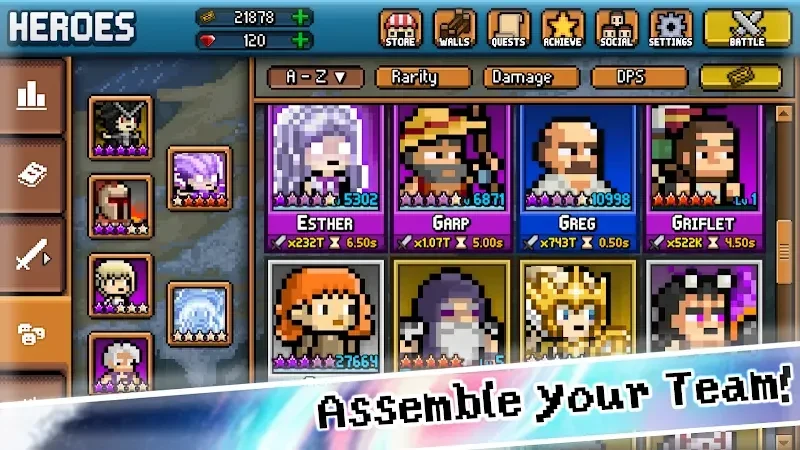
Days Bygone includes more than 20 heroes to summon, with each one offering different abilities. Recruiting is only the first step: heroes can be leveled and arranged into a team suited to the situation. The walkthrough also describes six hero slots that can be unlocked with rubies, giving players room to assemble a broader group as their progress develops. Because heroes can serve different purposes, team selection becomes part of the preparation for difficult defense runs rather than a separate system from the main battle.
Weapons add another layer to the castle’s defenses. The game advertises more than 20 unique weapons, covering options such as long-range attacks, bombs, and traps. Equipment and defensive statistics can be improved with gold, while the walkthrough explains that expedition rewards can also be exchanged for weapons. Skills and spells extend the same progression system: there are more than 25 skills to discover, and the feature description lists over 15 spells. Together, these systems let players improve direct damage, survivability, mana, and other parts of their defense instead of relying on a single upgrade path.
Use gold, elixir, and rewinds to keep progressing
Gold and elixir are the main resources used to develop the castle. Gold can improve statistics and equipment, while elixir is used to discover and upgrade skills. The game’s growth model is designed around repeated attempts: push as far as possible, earn resources, strengthen the castle, and then attempt a higher stage. This makes each run part of a wider progression rather than an isolated match.
The walkthrough identifies rewinding as a major mechanic unlocked around Day 51. A rewind takes the player back through an earlier point in the progression while providing resources and opportunities to develop skills. The recommended flow is to discover skills, upgrade useful choices, push farther, and then rewind again for more elixir. The source also notes that skill requirements can vary depending on a player’s other upgrades, weapons, and overall progress, so there is no single skill level that applies to every account at a particular day.
The early walkthrough advises new players to concentrate on ordinary upgrades and avoid spending limited weapon crates or rubies too quickly. It describes the starting Training Sword as useful well into the early progression and recommends saving rubies rather than exchanging them for common resources. Hero tickets are described as another resource to manage carefully, with groups of ten providing a guaranteed Epic according to the supplied guide. These recommendations are part of the game’s resource-management strategy: spending immediately may help in the short term, while saving can support more valuable later choices.
Explore expeditions, dungeons, and fossils
The main castle defense is supported by additional modes. Dungeon Defense lets players explore dungeons of different difficulty levels and obtain keys for treasures. Expeditions focus on uncovering fossils, also called bones in the walkthrough, which can be used in a dedicated shop. These modes connect directly to the broader upgrade loop because their rewards can provide equipment and other progression materials.
The supplied guide places particular emphasis on Expedition farming. Players can use crowd-control-oriented heroes, including abilities that freeze or slow enemies, when trying to extend a run. Once a suitable difficulty can be cleared consistently, fossils can be saved for shop purchases. The guide specifically identifies Caladbolg as a legendary weapon available through the bone shop and describes greater runes as an important longer-term use for fossils. These activities give players a reason to develop more than one battle setup, since the team that performs well in castle defense may not be the best choice for extending an expedition.
Play with guilds and other players
Players can create or join guilds and interact with other members. Guild participation provides a social layer to the otherwise progression-focused defense loop, with opportunities to share defensive techniques, take part in events, and fight alongside friends. The source also describes clashes with friends, while the global leaderboard adds a broader competitive objective for players who want to compare their results.
Guilds do not replace the individual upgrade systems. Players still need to recruit heroes, improve weapons, discover skills, and strengthen the castle to handle enemy waves. Instead, guild activities give those personal improvements a shared context, allowing strategy discussions and group events to sit alongside solo defense, dungeon exploration, and expedition runs.
What the longer progression involves
The walkthrough presents Days Bygone as a game that becomes more involved after its opening stages. Early play focuses on earning gold and pushing through the first days, while later progress introduces rewinding, skill discovery, hero tickets, expedition farming, weapon planning, and rune upgrades. It also notes that idle rewinds can provide some gold and contribute to rewind counts, but do not provide the same combination of elixir and hero tickets as active play. This creates a practical distinction between passive accumulation and actively managing a run.
Overall, the game suits players who enjoy a tower defense structure with a persistent upgrade system. Its direct tap-to-defend controls make the moment-to-moment action accessible, while the combination of heroes, equipment, spells, skills, resources, extra modes, guilds, and leaderboard competition gives longer-term players several systems to manage. The result is a defense game focused as much on planning the next improvement as on surviving the current wave.
Version history
View all26 Aug 2026 · stable
Frequently asked questions
What type of game is Days Bygone?
It is a strategy tower defense game in which players defend a castle against continuous waves of monsters, Titans, and bosses.
How do you control the defense?
The primary control is tap-to-shoot. Players can also use weapons, traps, spells, skills, and summoned heroes to strengthen their defense.
What are rewinds used for?
Rewinds let players return through earlier progression after pushing as far as possible, then use the resulting resources and skill discoveries to improve future runs.
Can players join other people in the game?
Yes. Players can create or join guilds, interact with members, share defensive techniques, participate in events, and fight alongside friends.
What are expeditions and dungeons for?
Dungeon activities provide keys for treasures, while expeditions let players uncover fossils or bones that can be exchanged for progression items such as weapons and runes.